
 Food fraud costs the global food industry approximately $49 billion per year. But what is food fraud and how can you protect your business from it? Food fraud is a collective term encompassing the intentional substitution, addition, tampering, or misrepresentation of food, food ingredients or packaging, or false or misleading statements about a product, all for economic gain. Although food fraud certainly isn’t a new phenomenon, the issue is growing in importance, thanks to ever-increasing complexities in the global food supply chain and new regulations suppliers have to adhere to.
Now more than ever, you need to take serious preventative approaches to reduce the risks that food fraud poses to public health and safety, food integrity, and your brand’s reputation. A single incident can permanently destroy a valuable brand, cause long term industry-wide losses, close off export markets and damage trust in public institutions.
Beyond the food safety vulnerabilities, food fraud creates tremendous economic harm and undermines peoples’ trust in the food supply chain, extending to companies, the food industry and even public institutions. Addressing and preventing food fraud is important to sustain economic growth, to maintain the flow of food across longer supply chains, to increase consumer trust in the economy, and to maintain social harmony.

More than 800 food safety professionals from around the world gathered in St. Louis this week for SQF Unites 2026, marking the largest attendance in the event’s history.
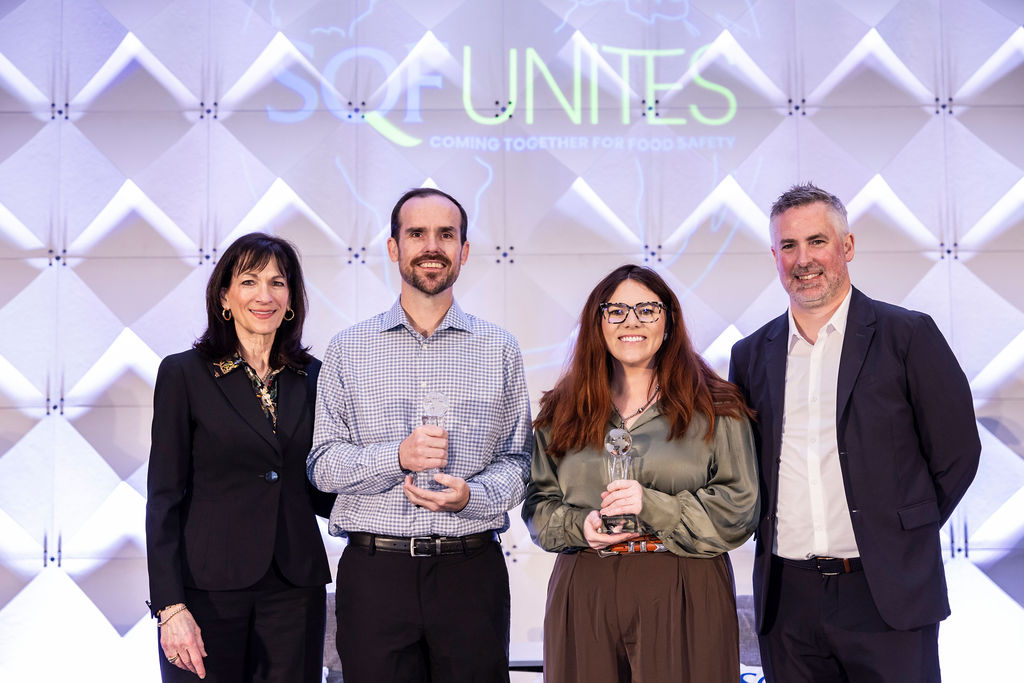
SQFI announces EAGLE Certification Group's Brian Shelton and Landmark Snacks' Emily Wagner as recipients of the 2026 SQF Excellence Awards at the 2026 SQF Unites conference in St. Louis.
With Edition 10 audits arriving as early as Jan. 2, 2027, sites that start closing gaps today will walk into their audit with far more confidence than those scrambling at the end of 2026.
Privacy Policy |
Terms of Use
251 18th Street S., Suite 1200 Arlington, VA 22202 | Phone: (202) 220-0635
© SQFI. All Rights Reserved.
Web Design & Development by Matrix Group International, Inc.

